
Many people first notice an underbite in an ordinary moment. A child smiles in a school photo, bites into an apple from the side, or closes their mouth and the lower teeth sit in front of the upper teeth.
From a parent’s point of view, that quickly leads to two questions: Is this just a stage, and do braces fix underbite in a straightforward way?
Sometimes braces can fix an underbite. Sometimes they help only part of the problem.
An underbite means the lower teeth or lower jaw sit forward compared with the upper teeth or upper jaw. In mild cases, the issue is mainly dental, meaning the teeth are tipped or positioned in a way that can often be improved with orthodontic treatment such as braces treatment.
In other cases, the underbite is skeletal. That means the upper and lower jaws have grown in a way that creates a mismatch, and braces alone may not fully correct it.
That difference matters. It affects what treatment can realistically do, how early care should begin, and whether a patient may need more than braces for a stable bite.
Bryant Ortho in Windsor Mill provides children's orthodontics focused on monitoring jaw and tooth development, so families can get clear guidance about growth and early bite concerns.
An underbite does not have one single cause. It can come from the way teeth erupt, the way the jaws grow, inherited facial structure, or a mix of these factors.
Some children have a family pattern of a prominent lower jaw or a smaller upper jaw. Others have a bite problem that looks skeletal at first but is partly a dental underbite, meaning the teeth themselves are contributing to the way the bite fits together.
Thumb sucking and certain tongue posture habits can influence bite development, though they do not explain every underbite. Airway issues and chronic mouth breathing may also affect facial growth over time in some patients.
That is why photos alone rarely tell the full story. Orthodontists usually need an exam, bite analysis, and imaging to tell whether the underbite is mainly dental, mainly skeletal, or a combination of both.
Braces can often correct a mild dental underbite. In these cases, the upper and lower jaws are fairly well aligned, but the teeth are angled or positioned in a way that places the lower teeth ahead of the upper teeth.
Braces use controlled pressure to move teeth gradually through bone. Over time, that can improve the bite, reduce uneven tooth wear, and make chewing feel more balanced.
Clear aligners may also help in selected cases. Still, braces often give the orthodontist more control when the bite needs more complex movement.
That is especially true when several teeth need to rotate, tip, or shift together. In growing children, early treatment may also help if the upper jaw is narrow or slightly set back.
A more severe underbite may involve the jaws themselves rather than just the teeth. If the lower jaw is significantly forward, or the upper jaw is underdeveloped, braces alone may straighten the teeth without fully correcting how the jaws meet.
That can create a result that looks better on the surface but remains limited in function or stability. Biting, speech, and long-term wear patterns may still be affected.
In growing patients, orthodontists may sometimes use appliances that help guide jaw development. In adults, where growth is complete, surgical orthodontics with braces may be the most predictable option for a pronounced skeletal underbite.
That idea can sound intimidating, but it is not the right treatment for everyone. The main point is simple: braces move teeth well, but they do not replace major jaw correction when the bones are the main issue.
A good underbite evaluation involves more than checking whether the front teeth overlap. The orthodontist will usually look at facial symmetry, jaw position, tooth angulation, and how the bite functions when the mouth opens and closes.
Some patients have what is called a functional shift. That means the jaw slides into an underbite position because certain teeth interfere with the bite, not because the jaw bones are truly mismatched.
That distinction is important because a functional shift may be more manageable with early orthodontic treatment. A true skeletal discrepancy is often more complex.
Age also matters. A child who is still growing may have treatment options that are not available later, which is one reason many orthodontists prefer to have bite concerns evaluated in childhood rather than waiting for all permanent teeth to come in.
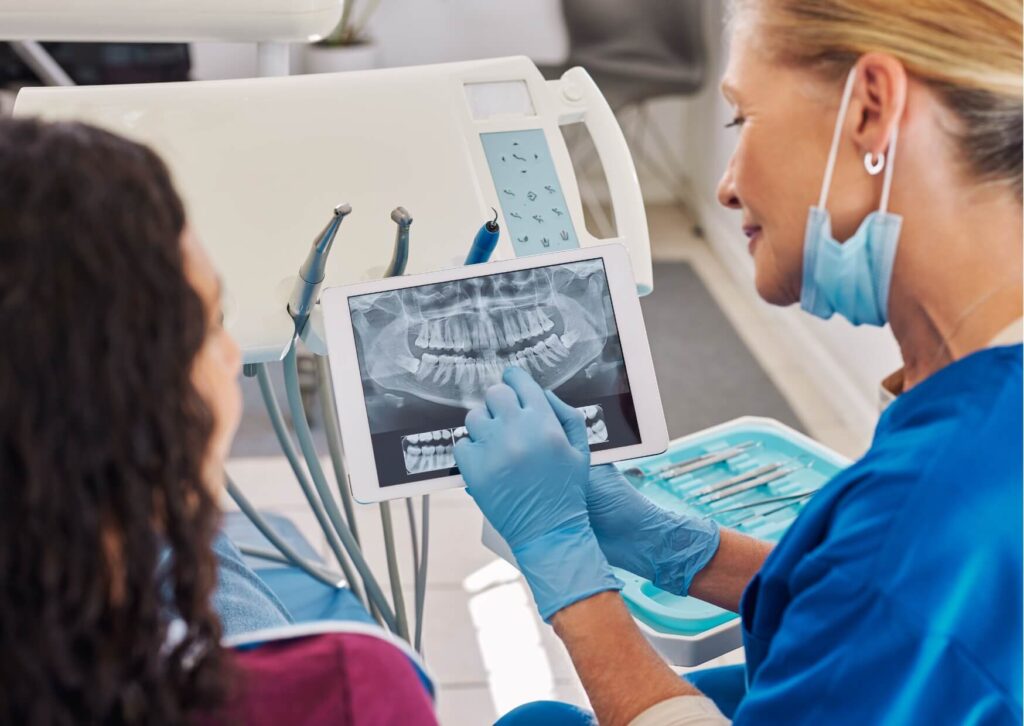
Parents often hope an underbite will resolve on its own. That can happen in a small number of mild cases, but a clear underbite that continues over time usually deserves an orthodontic evaluation.
Growth is not just a background detail here. It is often the window that makes certain treatments possible.
When the upper jaw needs guidance, early intervention may help support more favorable development. Waiting too long can narrow the treatment choices and make later correction more involved.
This is also where common assumptions can get in the way. Families may hear that crooked teeth are only cosmetic or that treatment should wait until the teen years, but bite problems are not just about appearance.
A significant underbite can affect chewing, speech, tooth wear, and confidence during important years of social development. Looking early is not overreacting; it is thoughtful preventive care.
Some underbites are obvious without causing much discomfort at first. Others come with signs that the bite is placing stress on the teeth, jaw joints, or surrounding tissues.
Arrange a dental or orthodontic evaluation if there is difficulty biting or chewing, frequent chipping of the front teeth, speech changes, jaw strain, or a bite that seems to be worsening as growth continues. Mouth breathing, facial asymmetry, and a child avoiding certain foods can also be useful clues.
Prompt assessment is especially important if there is pain, jaw locking, trauma to the teeth, rapid bite changes, or trouble eating normally. These signs do not always mean an emergency, but they should not be ignored.
| Situation | What May Be Happening | Common Treatment Direction |
| Mild underbite in a child | Teeth are misaligned, with some growth still available | Braces or early orthodontic treatment may help correct the bite |
| Skeletal underbite in a growing child | Upper and lower jaw growth are mismatched | Growth-guided orthodontic appliances, sometimes followed by braces |
| Mild underbite in an adult | Mainly a tooth-position issue | Braces or aligners may improve the bite if the case is suitable |
| Severe underbite in an adult | Significant jaw discrepancy | Braces may be combined with orthognathic surgery, which is jaw surgery used to correct skeletal bite problems |
This table is general education, not a diagnosis. The same bite can look similar from the outside but need very different treatment once imaging and jaw measurements are reviewed.
Start with simple observation. Notice whether the lower teeth usually sit in front of the upper teeth, whether chewing looks awkward, and whether speech or jaw comfort seems affected.
Photos taken over time can be surprisingly helpful. A school picture from two years ago, a recent smiling photo, and a side profile can sometimes show whether the bite has stayed stable or become more pronounced.
It also helps to ask practical questions. Is eating certain foods harder, are the front teeth wearing down, and does the child avoid smiling with teeth visible?
The next step is not to search for a one-size-fits-all answer online. It is to get a proper orthodontic assessment so your family can learn whether braces alone are likely to work, whether timing matters, and what realistic outcomes look like.
That kind of clarity often brings relief. Even when treatment is not needed right away, knowing what the bite is doing and what to watch for can make the road ahead feel much less uncertain.
Bryant Ortho in Windsor Mill offers children's orthodontics for families near Owings Mills and Baltimore; call (443) 917-2128 to schedule an evaluation and discuss next steps.
Sometimes. Braces can completely correct some mild to moderate underbites that are mainly caused by tooth position, but a skeletal underbite may need additional treatment.
A noticeable underbite should usually be evaluated in childhood, even if treatment does not begin right away. Early assessment helps the orthodontist decide whether growth can be used to improve the result.
Adults can often improve an underbite with braces if the problem is mainly dental. If the jaw bones are significantly mismatched, braces alone may not fully correct the bite.
No. An underbite can affect chewing, speech, tooth wear, and jaw comfort, depending on its severity.
Severity cannot be judged reliably from appearance alone. If the lower teeth consistently sit ahead of the upper teeth, or if there is pain, chewing difficulty, or worsening bite changes, a dental or orthodontic evaluation is the safest next step.