
Many people first notice a smile or bite concern, then wonder whether orthodontic treatment will also change how their face looks. That is a fair question, because braces can affect facial appearance in some cases, especially when the bite is significantly out of alignment.
In most patients, braces do not completely reshape the face. What they often do is move teeth into better positions, improve lip support, and correct how the upper and lower jaws meet, which can make the face look more balanced from the front or side.
At Bryant Orthodontics in Windsor Mill, MD, our treatment plans focus on personalized orthodontic care and provide the kind of evaluation patients use to understand how bite and alignment affect facial balance.
Braces apply controlled pressure that slowly moves teeth through the surrounding bone. As teeth shift, the lips and cheeks may rest a little differently, which can lead to subtle soft tissue changes in the facial profile.
A corrected bite can also change how the lower face looks at rest. For example, if the front teeth were more prominent before treatment, moving them into better alignment may make the lips look less strained.
In growing children and teens, orthodontic treatment may help guide developing bite relationships while the face is still maturing. In adults, changes are usually more limited because the facial bones are no longer growing, and research on facial growth helps explain that difference.
The main point is simple: braces mostly change tooth alignment and bite function. They usually do not dramatically change the underlying bone structure unless treatment is combined with jaw surgery or a plan such as surgical orthodontics.
Some alignment issues affect appearance more than others. That is why one patient may notice a visible facial change while another mainly notices straighter teeth.
An overbite means the upper front teeth overlap the lower front teeth too much. Overjet means the upper front teeth project too far forward.
These problems can make the upper lip look more prominent or the lower face look less balanced. When braces correct them, the profile may appear softer or more proportionate, especially in side-view photos.
Learn more about how braces can correct an overbite.
An underbite happens when the lower teeth sit in front of the upper teeth. A crossbite means some upper teeth bite inside the lower teeth instead of outside.
These conditions can affect facial symmetry and how the jaw sits at rest. Braces may improve the bite and, in some cases, make the face look more even.
If the problem comes more from jaw position than tooth position, orthodontic treatment may need to be combined with other approaches such as surgical orthodontics. Read our post on whether braces can fix an underbite.
Crowded teeth can push other teeth out of ideal alignment. Protrusion means the teeth angle outward more than normal.
These patterns can affect lip closure and how full the mouth area looks. Correcting protrusion may change how the lips rest together and create a cleaner facial profile without making the face look unnatural.
Not every orthodontic case leads to a visible facial difference. In general, changes are easier to notice when the starting bite problem is moderate to severe.
Children and teens may show more facial change because growth is still active. Early orthodontic guidance can sometimes influence how the bite develops and improve lower-face balance over time.
Adults can still see meaningful cosmetic changes, but those changes usually come from tooth position, lip support, and bite improvement rather than growth. If someone expects a dramatic jawline change from braces alone, that expectation usually needs clarification.
A realistic way to think about it is this: braces can refine facial balance, but they are not a substitute for every kind of facial change people may expect from online before-and-after photos.
This is a common follow-up question. The answer depends on what is being corrected.
If the front teeth are moved back, the lips may look less prominent, which can make the lower face seem a little slimmer. If a narrow dental arch is expanded, the smile may look broader, and that can subtly change how the midface appears in photos.
Temporary changes can also happen during treatment. Some patients feel their cheeks look different because braces add bulk on the teeth or because eating habits change for a short time after adjustments.
These short-term effects are not the same as a true structural facial change. Most appearance changes from braces are modest and related to bite correction rather than dramatic changes in face width.
Some orthodontic plans include removing teeth to create space for alignment or reduce protrusion. This topic often causes concern online, but the answer depends on the individual case.
Extractions do not automatically harm facial appearance. In carefully selected cases, they can improve lip posture, reduce strain when closing the mouth, and help create a more stable bite.
Treatment planning matters. The orthodontist should evaluate facial profile, crowding, jaw relationships, and long-term stability before recommending extractions.
If appearance is a major concern, it helps to ask how different treatment approaches may affect the profile. Learning about those tradeoffs is part of individualized treatment plans.
Braces work slowly, so facial changes, when they happen, usually develop gradually. Most patients notice tooth alignment first, then later see changes in smile width, lip posture, or profile.
Mild soreness is common after braces are placed or adjusted. That discomfort usually reflects normal tooth movement, not a harmful change in the face or jaw.
Treatment length depends on the complexity of the bite, the patient’s age, and whether additional procedures are needed. Some cases are straightforward, while others take longer because bite correction involves more than straightening the visible front teeth.
After active treatment, retainers help keep teeth in their corrected positions. Without retention, teeth can drift, which may reduce both the functional and cosmetic benefits of treatment.
Regular follow-up visits also matter because small bite shifts can happen over time. Maintaining the result is part of preserving any facial balance gained during treatment.
If the main concern is a recessed chin, a very prominent lower jaw, marked facial asymmetry, or difficulty closing the lips comfortably, the issue may involve jaw structure more than tooth position. In those situations, braces alone may not fully address the concern.
Some patients benefit from a combined orthodontic and oral surgery evaluation. This is more common in severe underbites, major overbites, or skeletal asymmetry, and orthognathic surgery indications can help explain when surgery is considered alongside orthodontic treatment.
When that is the case, surgical orthodontics explains how braces and surgery work together. That does not mean surgery is always needed; it means the diagnosis should match the actual cause of the problem.
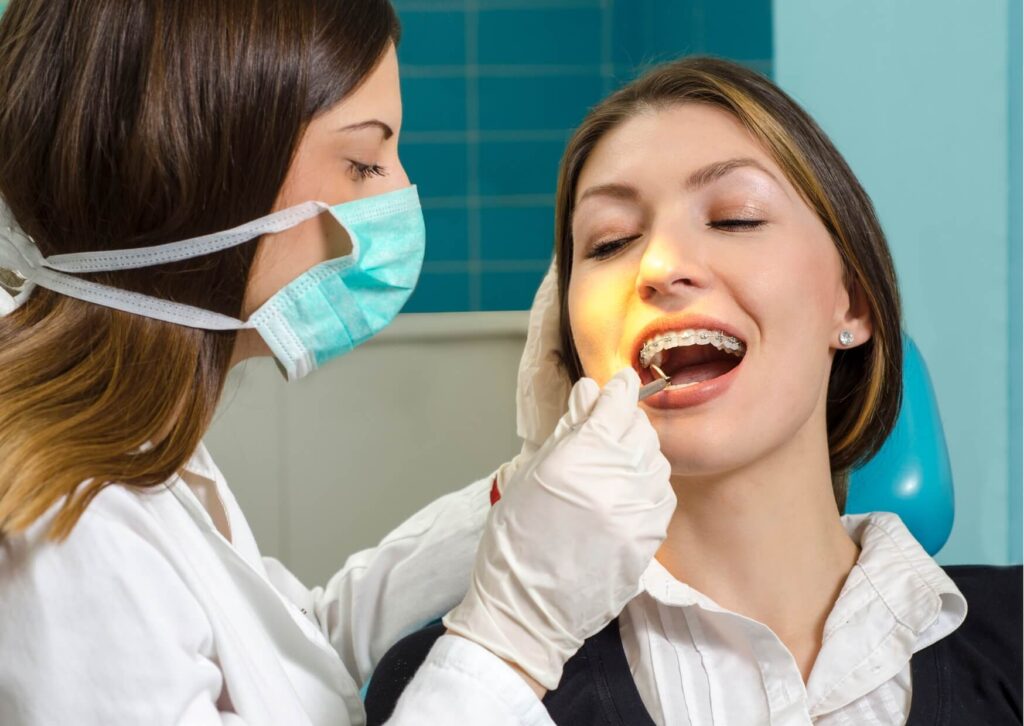
If you are asking whether braces will change your face shape, the real question is often whether your bite is affecting facial balance. That is best answered with an exam, photos, and imaging that show how the teeth, jaws, and soft tissues relate to each other.
Consider scheduling an evaluation if you have crowding, protruding front teeth, difficulty biting comfortably, an underbite, or a profile change that seems to be getting more noticeable. An orthodontist can explain what changes are realistic, what will likely stay the same, and whether treatment is mainly cosmetic, functional, or both.
A personalized treatment plan helps lay out those tradeoffs and expected outcomes.
Seek prompt dental or orthodontic care if there is jaw pain, locking, trauma, rapid bite change, or trouble chewing. Those problems need a proper diagnosis rather than assumptions based on appearance alone.
For many patients, the long-term value of braces is not just straighter teeth. It is a healthier bite, easier cleaning, and a facial appearance that looks more natural because the teeth and jaws work together more comfortably.
Bryant Orthodontics in Windsor Mill offers clear, individualized treatment plans for patients from nearby areas like Owings Mills and Baltimore; call (443) 917-2128 to schedule an appointment.
Braces may slightly change how the jawline appears if bite correction improves lip posture or the way the lower face closes. They do not usually create a major jawline change in adults unless treatment involves jaw surgery.
In some cases, bite correction can change lower-face proportions a little, but braces do not automatically make the face longer. The effect depends on the original bite and treatment plan.
Cheek appearance may look slightly different during or after treatment because the teeth and lips support the soft tissues differently. These changes are usually subtle.
Clear aligners and braces can create similar appearance changes when they correct the same tooth and bite problems. The result depends more on the treatment goals than on the appliance itself.
That usually requires an orthodontic evaluation. A clinician can assess whether the issue is mainly dental, meaning tooth position, or skeletal, meaning jaw structure and facial growth.