
Braces for kids can help correct crowded or crooked teeth, protruding front teeth, and bite problems, but the right timing depends on how a child’s teeth and jaws are developing. Many children should have an orthodontic evaluation by age 7, even though full braces treatment often starts later after more permanent teeth have come in.
If you're watching your child's jaw and tooth development and wondering whether early care is needed, a children's orthodontics evaluation can clarify growth-related issues and timing. Bryant Orthodontics in Windsor Mill, MD evaluates developing bites and recommends observation or timely treatment to support healthy dental growth.
Parents often first notice crowded teeth, large gaps, front teeth that stick out, or upper and lower teeth that do not fit together normally. Other signs can include trouble biting, frequent cheek biting, mouth breathing, early or late loss of baby teeth, or jaws that seem out of proportion.
These issues can develop because of genetics, jaw growth patterns, tooth size, thumb or finger habits, early loss of baby teeth, or teeth erupting in the wrong position. In some cases, dental spacers for kids may help preserve room while permanent teeth come in.
Orthodontists do not judge treatment needs by appearance alone. They evaluate tooth position, jaw relationship, facial growth, and available space to decide whether a child needs treatment now, later, or only monitoring.
A bite problem is called malocclusion. Common examples include an overbite, where the upper front teeth overlap the lower teeth too much; an underbite, where the lower teeth sit in front of the upper teeth; and a crossbite, where some upper teeth bite inside the lower teeth. For more on one common bite issue, see braces fix overbite.
The American Association of Orthodontists recommends a first orthodontic checkup no later than age 7. That does not mean every 7-year-old needs braces, but it is often the right time to spot developing bite or jaw problems.
At this age, enough permanent teeth are usually present to assess how the bite is forming. An orthodontist can also identify concerns that may be easier to address while a child is still growing.
Many children do not need immediate treatment. If there is no urgent growth or eruption issue, the orthodontist may recommend observation and periodic visits until treatment timing is more favorable, often between ages 9 and 14.
Earlier treatment may help in cases such as crossbites, severe crowding, protruding front teeth at higher risk of injury, harmful oral habits, or jaw growth imbalances. Recommendations should be based on an exam and records such as photos, digital scans, and X-rays when clinically needed.
Metal braces remain a common choice for children because they are durable, effective, and work well for many bite and alignment problems. They also do not rely on a child remembering to wear a removable appliance.
Ceramic braces are less noticeable than metal braces, but they may cost more and can be more fragile. They may also stain around the ties if hygiene is not consistent. For a side-by-side comparison, see clear vs. metal braces.
Clear aligners can work for selected cases, especially when a child is responsible enough to wear them as directed. They are removable for meals and brushing, but lost trays or inconsistent wear can slow progress. For older children and teens, Invisalign Teen may be an appropriate option.
|
Option |
Potential Advantages |
Important Tradeoffs |
|---|---|---|
|
Metal braces |
Durable, precise, and suitable for many cases |
More visible and require careful cleaning |
|
Ceramic braces |
Less noticeable than metal |
More fragile and not right for every child |
|
Clear aligners |
Removable for meals and brushing |
Require consistent wear and responsible handling |
|
May help address selected jaw or bite concerns during growth |
Only useful for certain problems and may still be followed by braces |
Some children benefit from two-phase treatment. In that approach, an early phase addresses a specific growth or bite concern, followed by a resting period and possible braces treatment after more permanent teeth erupt.
Two-phase treatment is not necessary for every child. Parents should feel comfortable asking why early treatment is recommended instead of continued observation.
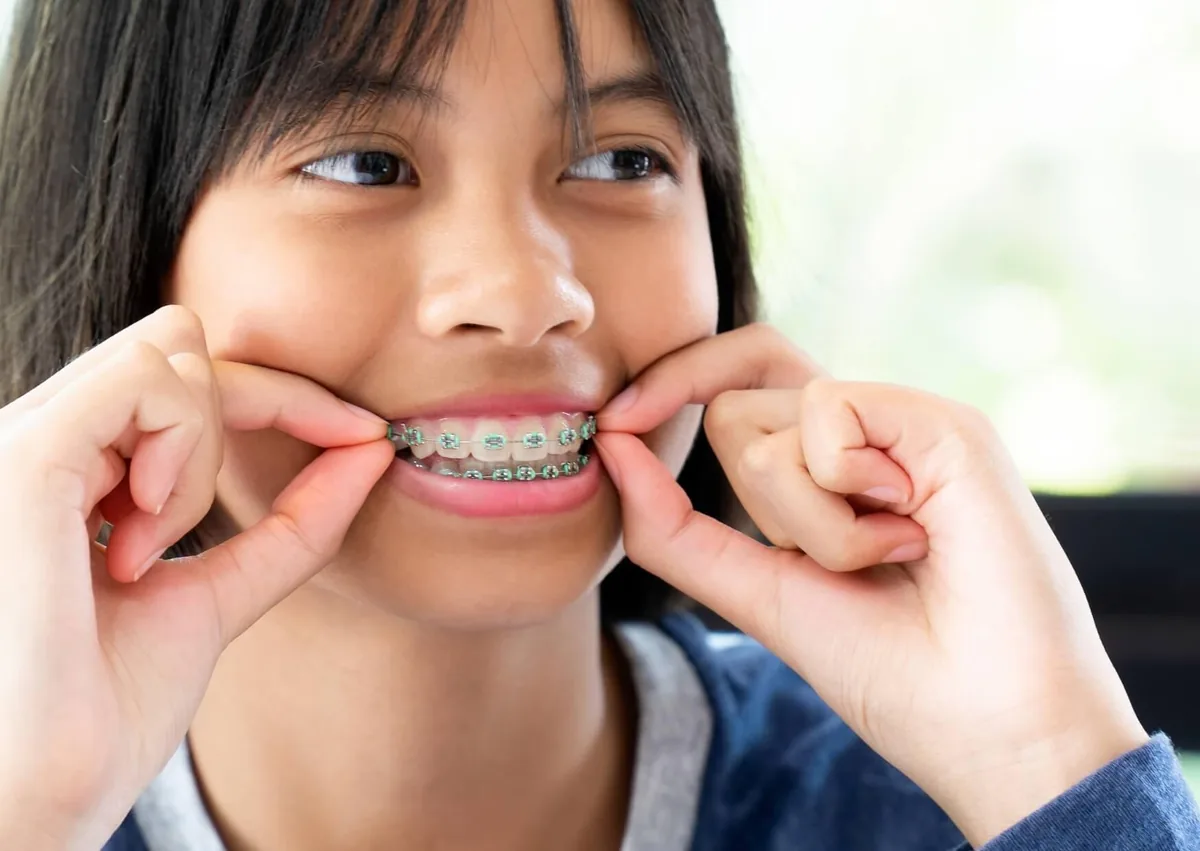
Getting braces placed should not involve drilling into the teeth. After placement and adjustments, it is common for teeth to feel sore or tender for a few days, and orthodontic wax can help if a bracket rubs the lips or cheeks.
Treatment time depends on the bite problem, growth, tooth movement, missed appointments, broken appliances, and how well a child follows instructions for elastics or aligners. Many comprehensive cases take about 12 to 30 months, but the treating orthodontist can give the most accurate estimate.
Contact the orthodontic office if a wire is poking, an appliance becomes loose, or pain is severe, persistent, or getting worse. Facial swelling, fever, trouble swallowing, trouble breathing, or uncontrolled bleeding needs prompt professional evaluation.
Children with fixed braces should avoid hard and sticky foods that can loosen brackets or bend wires. Foods like apples or raw carrots can often still be eaten if cut into small pieces, while ice, hard candy, sticky caramel, and chewing on pens should be avoided. For more diet guidance, see eating with braces.
Cleaning around each bracket and along the gumline is essential. Plaque buildup can lead to swollen gums, cavities, and permanent white marks on the enamel.
A floss threader or small interdental brush can make cleaning under the wires easier. Regular dental checkups and cleanings are still important throughout orthodontic treatment.
A properly fitted mouthguard helps protect the teeth, lips, and braces during sports. Children should use the type recommended by their dental or orthodontic professional because tooth positions continue changing during treatment.
After braces or aligners, retainers help hold the teeth in their new positions while the bone and surrounding tissues adapt. Retainer wear is a long-term part of treatment, and skipping it increases the chance that teeth will shift.
Successful orthodontic treatment may improve bite function, make crowded areas easier to clean, reduce abnormal tooth wear, and create a more balanced smile.
Results still depend on the starting problem, growth, oral hygiene, appointment attendance, and consistent use of appliances and retainers.
It is smart to schedule an evaluation if a child has crowded or blocked-out teeth, a visibly uneven bite, jaw shifting, chewing difficulty, or front teeth that seem more exposed to injury.
An orthodontist can explain whether treatment is needed now, later, or not at all, along with expected benefits, limits, timing, and costs, including braces with insurance questions for the specific case.
An in-person evaluation lets an orthodontist assess growth, discuss bracing or monitoring, and give a personalized timeline and cost estimate. Call Bryant Orthodontics for children's orthodontics in Windsor Mill, MD, serving families from nearby Woodlawn and Catonsville; call (443) 917-2128 or book online to arrange an appointment.
No. Some children have healthy, functional bites without orthodontic treatment, while others may benefit from monitoring, braces, aligners, or another appliance. An exam is needed to tell the difference between a cosmetic concern and a problem affecting eruption, function, or dental health.
Braces usually cause temporary pressure or tenderness after placement and adjustments, but severe pain is not expected. Persistent or worsening pain, swelling, or signs of infection should be checked promptly.
Yes, in selected cases. Early treatment may help with a crossbite, severe crowding, an eruption problem, or a jaw growth concern, but many children can safely wait until more permanent teeth come in.
Yes. A braces-compatible mouthguard can help reduce injury to the teeth, lips, and appliances, especially during contact or collision sports.
Coverage varies by plan and may depend on whether treatment meets the insurer’s rules for orthodontic benefits. Families should review deductibles, lifetime orthodontic maximums, waiting periods, age limits, and exclusions with both the insurer and orthodontic office.