
A palate expander for adults can help widen a narrow upper jaw in selected cases, improve certain crossbites, and create space for safer tooth alignment. Because the upper jaw is fully matured in adults, treatment is usually more complex than it is in children, so an adult orthodontics evaluation is the best way to confirm whether expansion, tooth movement alone, or surgery makes the most sense.
If you're exploring ways to widen a narrow upper jaw or address crowding in adulthood, a focused adult orthodontics evaluation can clarify whether expansion, aligners, or surgery is the best route. At Bryant Orthodontics in Windsor Mill, MD, we tailor treatment plans to your anatomy and goals so you understand the likely options and expected timeline.
A narrow upper jaw can cause the upper teeth to bite inside the lower teeth. This is called a posterior crossbite, and it is one of the most common reasons adult expansion is considered.
Other signs may include crowding, a high or narrow palate, an uneven bite, or upper and lower arches that do not fit together well. Some adults also notice that certain teeth wear unevenly or are harder to clean because of overlap.
Not every crowded smile needs expansion. In some cases, the problem is mainly tooth position rather than jaw width, and moving teeth outward is not the same as widening the underlying bone.
In children, the midpalatal suture, the joint between the two halves of the upper jaw, is usually more responsive to expansion. In adults, that area is more mature and resistant, so conventional tooth-supported expansion is often less predictable.
That is why adult treatment may involve a removable appliance for limited dental movement, a fixed expander, a bone-anchored device such as MARPE, or surgically assisted expansion. In more advanced cases, treatment may involve surgical orthodontics.
The goal may be dental expansion, skeletal expansion, or a combination of both. The right approach depends on how much widening is needed and whether the issue is mainly in the teeth, the jaw, or both.
If true skeletal expansion occurs, a temporary gap can form between the upper front teeth. That space often closes partly on its own and is usually managed later with braces or clear aligners.
The best appliance depends on age, anatomy, gum support, and the overall orthodontic plan. No single palate expander for adults is right for every case.
|
Option |
Typical Purpose |
Main Tradeoffs |
|---|---|---|
|
Removable expansion appliance |
Small, selected dental corrections |
Depends heavily on wear; usually does not produce substantial skeletal widening |
|
Tooth-supported fixed expander |
Dental expansion or limited widening in selected cases |
May tip teeth outward and increase stress on gums or supporting bone |
|
Miniscrew-assisted rapid palatal expansion, often called MARPE |
Greater skeletal effect without jaw surgery in suitable adults |
Placement requires local dental procedures; success varies with anatomy and maturity |
|
Surgically assisted rapid palatal expansion, often called SARPE |
More predictable widening for significant skeletal constriction |
Involves surgery, recovery, cost, and coordination between specialists |
|
Braces or clear aligners without an expander |
Tooth alignment when true jaw widening is unnecessary |
Movement is limited by bone and gum boundaries; may not correct a skeletal crossbite |
If crowding is the main issue rather than upper-jaw width, selected tooth extractions may be discussed. In other cases with larger jaw discrepancies, corrective jaw surgery may be more appropriate than expansion alone.
Published comparisons of skeletal outcomes support the idea that MARPE and SARPE can both be effective in adults, but they serve different cases based on anatomy and the amount of expansion required.
When it is well matched to the diagnosis, adult expansion can improve how the upper and lower arches fit together. It may also correct a crossbite and create room to align teeth with better long-term support.
A better fit between the arches can make crowded areas easier to clean. It may also reduce uneven biting forces on certain teeth.
Some studies show that expansion can increase nasal cavity width, but airway changes and sleep-related improvement are not guaranteed. A palate expander should not be presented as a stand-alone treatment for sleep apnea.
Limitations are important to understand. Risks can include incomplete skeletal opening, relapse, tooth tipping, gum recession, bone loss around teeth, root effects, asymmetry, or appliance failure.
Pressure across the palate, teeth, cheeks, or nose is common after placement or activation. Temporary speech changes, extra saliva, and chewing difficulty are also common during the first several days.
Severe pain is not considered a routine adjustment symptom. If pain is intense, worsening, or paired with swelling or bleeding, the treating office should be contacted promptly.
Active expansion often takes several weeks, but the exact timing depends on the appliance and treatment goal. After widening is complete, the device usually stays in place for several months so new bone can form and stabilize the result.
Many adults also need adult braces or clear aligners afterward to finish tooth alignment. Total treatment may last a year or longer depending on the complexity of the case.
Call the treating office if the appliance becomes loose, breaks, feels uneven, or causes persistent bleeding, swelling, pus, fever, or major gum changes. Trouble breathing, rapidly spreading facial swelling, or difficulty swallowing requires urgent medical attention.
Food and plaque can collect around a fixed expander very easily. Brushing carefully along the gumline and around the appliance is important throughout treatment.
An interdental brush or water flosser may help clean under the device. These tools are helpful, but they do not replace regular brushing and professional dental care.
Follow the orthodontist's instructions for activation and food restrictions. Do not change the turning schedule, reverse turns, or try to repair the appliance yourself.
Retention matters after expansion. A retainer, continued appliance wear, or another stabilization method may be needed to help maintain the bite and protect gum and bone support over time.
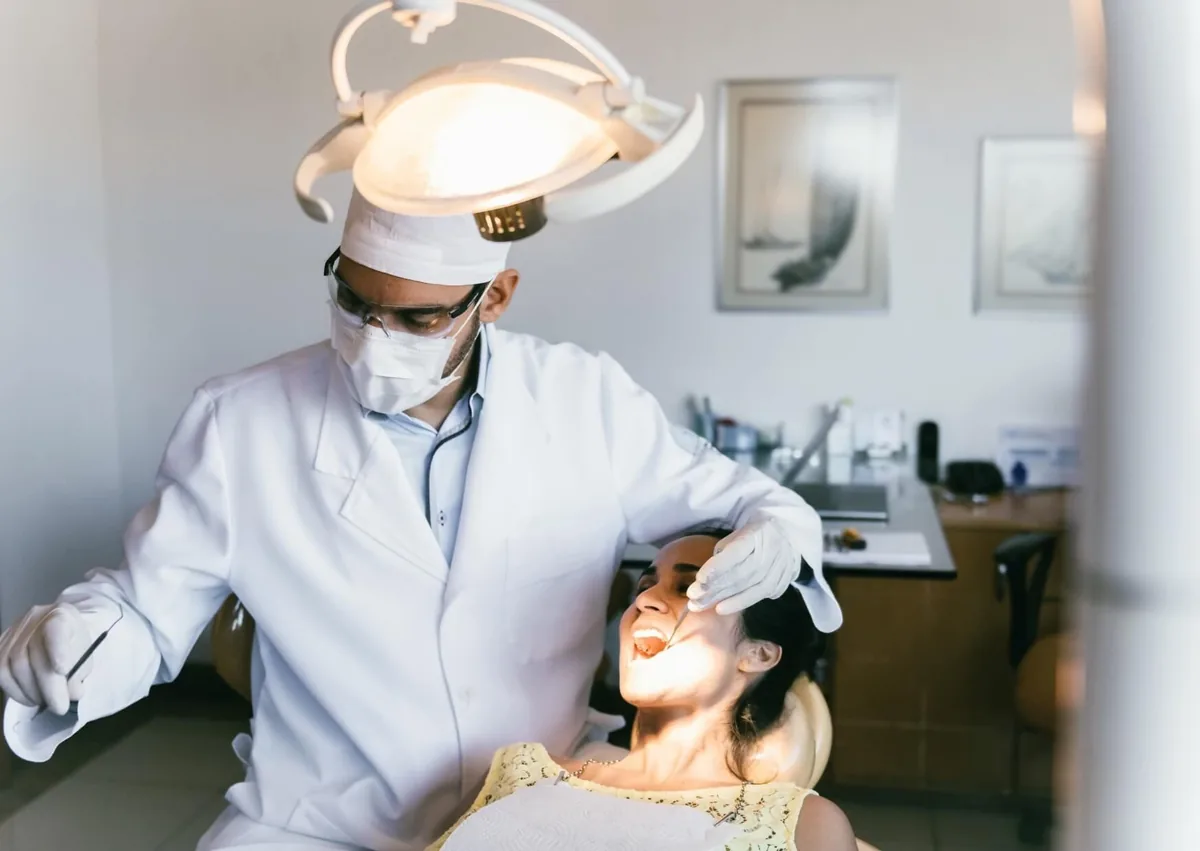
Consider an adult orthodontics evaluation if your upper teeth bite inside the lower teeth, your bite feels uneven, or crowding is difficult to clean. An evaluation is also useful if another provider has told you that your upper jaw is narrow.
It is best not to assume that extraction, aligners, or expansion is automatically the right answer. An exam can clarify whether braces fix overbite in your case or whether jaw widening is part of the better plan.
Bring details about previous orthodontic treatment, gum disease, implants, missing teeth, jaw surgery, and any sleep or breathing evaluations. These factors can affect appliance choice, stability, and whether another specialist should be involved.
A palate expander can provide meaningful improvement when the diagnosis, appliance, and retention plan match the actual problem. A full orthodontic assessment is the safest way to understand your options and likely outcome.
A comprehensive evaluation will confirm whether expansion, aligners, or surgery fits your needs and outline a clear treatment and retention plan. Contact Bryant Orthodontics for adult orthodontics in Windsor Mill and nearby Woodlawn or Catonsville to discuss options and schedule an appointment at (443) 917-2128.
Yes, some adults can achieve meaningful upper-jaw expansion. The amount of widening and the safest method depend on anatomy, skeletal maturity, gum health, and whether bone-anchored or surgical support is needed.
Most adults describe pressure, tenderness, or temporary difficulty speaking and chewing rather than severe pain. Persistent or worsening pain should be reported to the treating clinician.
Clear aligners can move teeth outward in selected cases, but they usually do not create the same skeletal widening as MARPE or surgically assisted expansion. An orthodontist can determine whether dental movement alone is safe and enough for your bite.
Active widening may take several weeks, followed by a retention period that often lasts several months. The full timeline depends on the appliance, the amount of correction, healing, and whether braces or aligners are also needed.
Subtle changes around the smile or midface may occur, especially with skeletal expansion, but results vary. Significant cosmetic changes should not be promised, and facial effects should be discussed during treatment planning. For additional context, see braces change face shape.