
If your teeth look yellow while wearing fixed braces, it is usually best to wait until the braces are removed before using peroxide whitening products. Brackets and bonding material can interfere with whitening gel contact, making the final shade less predictable.
In the meantime, dental cleaning and thorough daily care may help with plaque and surface stains. If you have braces and want a brighter smile, understanding your whitening options can help you avoid uneven results and protect your enamel.
At Bryant Orthodontics in Windsor Mill, MD, we provide teeth whitening guidance and personalized support for patients with braces, helping them explore appropriate options based on their orthodontic treatment and the cause of discoloration.
Key Takeaway: If you have fixed braces, waiting until they are removed generally makes whitening more predictable, while cleaning may improve surface discoloration now. Ask your dentist whether you are seeing stain, plaque, or an enamel change before choosing a whitening product.
Table of Contents
Braces treatment corrects crowding, spacing, and bite problems by gradually moving teeth. It does not whiten teeth, and brackets and wires create extra places for food and plaque, a sticky film of bacteria, to collect.
Crowded or rotated teeth can also be harder to clean. Coffee, tea, and tobacco may add surface stains, while discolored elastic ties can make your smile look darker without a change in tooth color.
Not every mark is a stain. Chalky white spots around brackets can indicate mineral loss from enamel, while brown or dark areas may need evaluation for decay rather than cosmetic bleaching.
The right approach depends on your appliance and the cause of the discoloration. Before recommending bleaching, a dentist should check for cavities, gum inflammation, exposed roots, and existing sensitivity.
|
Option |
Potential Benefit |
Main Trade-Off |
|---|---|---|
|
Professional dental cleaning |
Removes plaque, tartar, and some surface stains |
Does not bleach the natural tooth color |
|
Whitening toothpaste |
May remove some surface stains |
Does not reliably lighten deeper tooth color; highly abrasive products or aggressive brushing may wear vulnerable areas |
|
Strips or peroxide gel with fixed braces |
May lighten exposed tooth surfaces |
Brackets interfere with placement and can make results uneven |
|
Dentist-guided whitening after braces |
Allows assessment and treatment of the full visible tooth surface |
Adds a separate cosmetic step and cost |
|
Whitening during clear-aligner treatment |
May be possible in selected cases under dental supervision |
Attachments, sensitivity, and tray suitability require review |
Whitening strips generally cannot sit flat against teeth covered by brackets, including those used with traditional metal braces. Generic whitening trays may not fit over the appliance either.
Peroxide can move through tooth structure, but that does not guarantee an even shade beneath bonded brackets. Dentist-supervised whitening after bracket removal is generally more predictable than trying to bleach around them.
Do not apply strong whitening products around brackets or use stronger gel to compensate for blocked areas. Ask your dentist about stain removal instead of increasing the product strength or application time yourself.
Being able to remove clear aligners does not automatically make whitening appropriate during treatment. Tooth-colored attachments can affect the plan, and an aligner is not necessarily designed to hold whitening gel safely.
Do not use an aligner or retainer as a bleaching tray unless your dentist specifically approves that appliance and product. Your dentist and orthodontist can coordinate whether whitening is appropriate during treatment or should wait until attachments are removed.
Watch Out: Avoid acidic DIY treatments such as lemon juice and abrasive scrubbing with charcoal or powders. These can damage or wear enamel and do not solve uneven whitening around brackets.
Keeping teeth and gums healthy is the most useful way to protect your smile's appearance during braces. A professional cleaning can remove some discoloration and help your dentist identify marks that need a different approach.
Choose toothpaste for cavity prevention rather than assuming a whitening label makes it better for braces. If cleaning causes persistent bleeding or pain, ask your dental team to check your technique and gum health.
Pro Tip: Bring 3 questions to your next visit: Is this surface stain or an enamel change? Would a cleaning help? When should we reassess whitening?
After braces come off, your dental team can remove residual adhesive, clean your teeth, and assess the enamel and gums. Whitening should wait until any decay, inflammation, or significant sensitivity has been addressed. There is no single waiting interval that suits everyone.
Peroxide whitening can cause temporary tooth sensitivity and gum irritation. Tell your dentist about existing sensitivity so the product, application schedule, or timing can be adjusted.
Dentist-dispensed home trays and in-office whitening involve different commitments. Home treatment requires repeated use as directed, while in-office treatment involves scheduled visits. Neither guarantees a particular shade or eliminates the need for future maintenance.
Cosmetic whitening is often an out-of-pocket expense, and prices depend on the method and office. Ask for a written estimate that identifies whether the exam, cleaning, trays, gel, and follow-up are included. Confirm any coverage directly with your dental plan.
Straightening teeth can make some previously crowded areas easier to clean, but daily care remains essential. Retainers help maintain alignment; brushing, cleaning between teeth, and routine dental visits help protect tooth and gum health. Limiting staining exposures can also help maintain a brighter appearance after whitening.
Whitening does not lighten crowns, veneers, or tooth-colored fillings, so visible restorations may no longer match after bleaching. White-spot enamel changes may also remain visible and need a separate assessment rather than repeated whitening.
Arrange a dental evaluation if discoloration is new, uneven, persistent, or difficult to explain, especially if a single tooth becomes darker. Tooth pain, swelling, or lingering sensitivity needs prompt dental assessment rather than a whitening product.
If you want a brighter smile, discuss it before your braces are removed so your dentist and orthodontist can coordinate the next step. Healthy teeth and gums, an assessment of the discoloration, and a realistic shade goal provide a sound starting point.
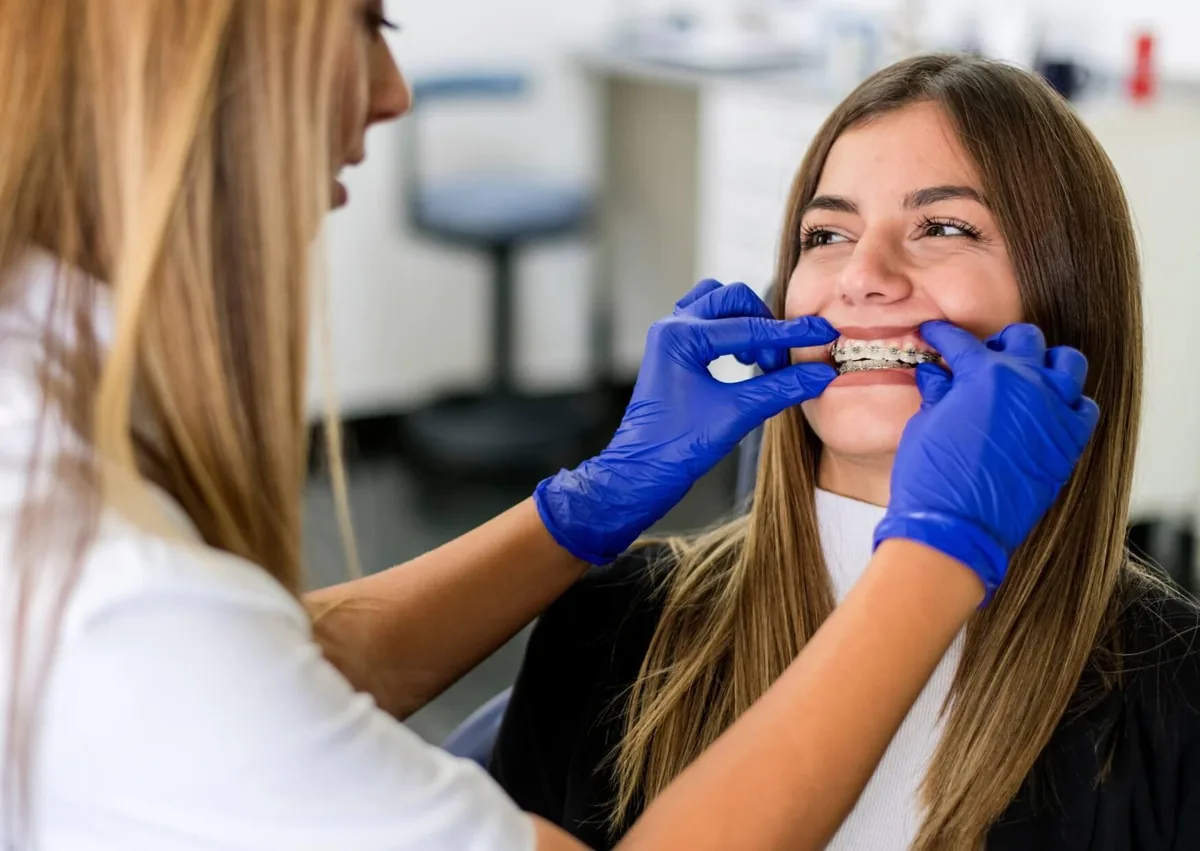
Achieving a brighter smile while protecting your teeth during orthodontic treatment starts with choosing the right approach. Whether you are managing surface stains with braces or planning to whiten your teeth after treatment, professional guidance can help you make an informed decision.
Bryant Orthodontics provides teeth whitening in Windsor Mill, MD, with personalized guidance for patients with braces. Contact us at (443) 917-2128 to discuss your options and schedule a consultation.
Whitening strips are generally not a good choice over fixed brackets because they cannot contact the teeth evenly. Ask your dentist about stain removal now and whitening after braces are removed.
Whitening toothpaste mainly helps remove surface stains where brushing reaches. It will not reliably change the color beneath bonded brackets or prevent uneven color after removal.
Your dentist should first check your enamel, gums, adhesive removal, and sensitivity. The appropriate timing depends on those findings rather than a fixed waiting period.
Whitening does not repair mineral loss in enamel and may initially make color differences more noticeable. A dentist can assess whether fluoride-based care or another treatment for white spots is appropriate.